Answering the question an investment decision actually needs
How I tested whether Springer Nature should build a career platform for researchers leaving academia — including whether they'd pay for it.

- 20+
- interviews in 8 countries
- 125
- researchers tested a live prototype
- 66%
- positive intent to try
- 23%
- willing to pay at indicative pricing
My role
I owned discovery and customer research, reporting to the Head of Publishing and Development and working with a Senior Product Manager, creatives and prototype developers. The Senior PM owned the business case and the investment presentation; I owned the evidence that went into it — scope, prioritisation and the demand signal.
Context
Springer Nature's Continuing Professional Development team wanted to serve an underserved moment in a researcher's life: leaving academia for industry. The hypothesis was that researchers struggle to see which careers fit them, what skills those careers need, where to learn them and who to ask. The question wasn't whether that struggle exists. It was whether Springer Nature should build a product for it.
The challenge
Discovery in this space usually stops at confirmed pain. Researchers will readily tell you that changing careers is hard. That says nothing about whether they'd use a platform for it, and even less about whether they'd pay. An investment decision needed a demand answer, not a sympathy answer.
What I did
I built validation as a ladder, raising fidelity and cost only when the evidence justified it.
- Qualitative breadth first: 20+ in-depth jobs-to-be-done interviews across 8 countries, including researchers at Harvard, Duke-NUS and MCRI. Mapped journeys, the value proposition, and which jobs the product would and wouldn't serve.
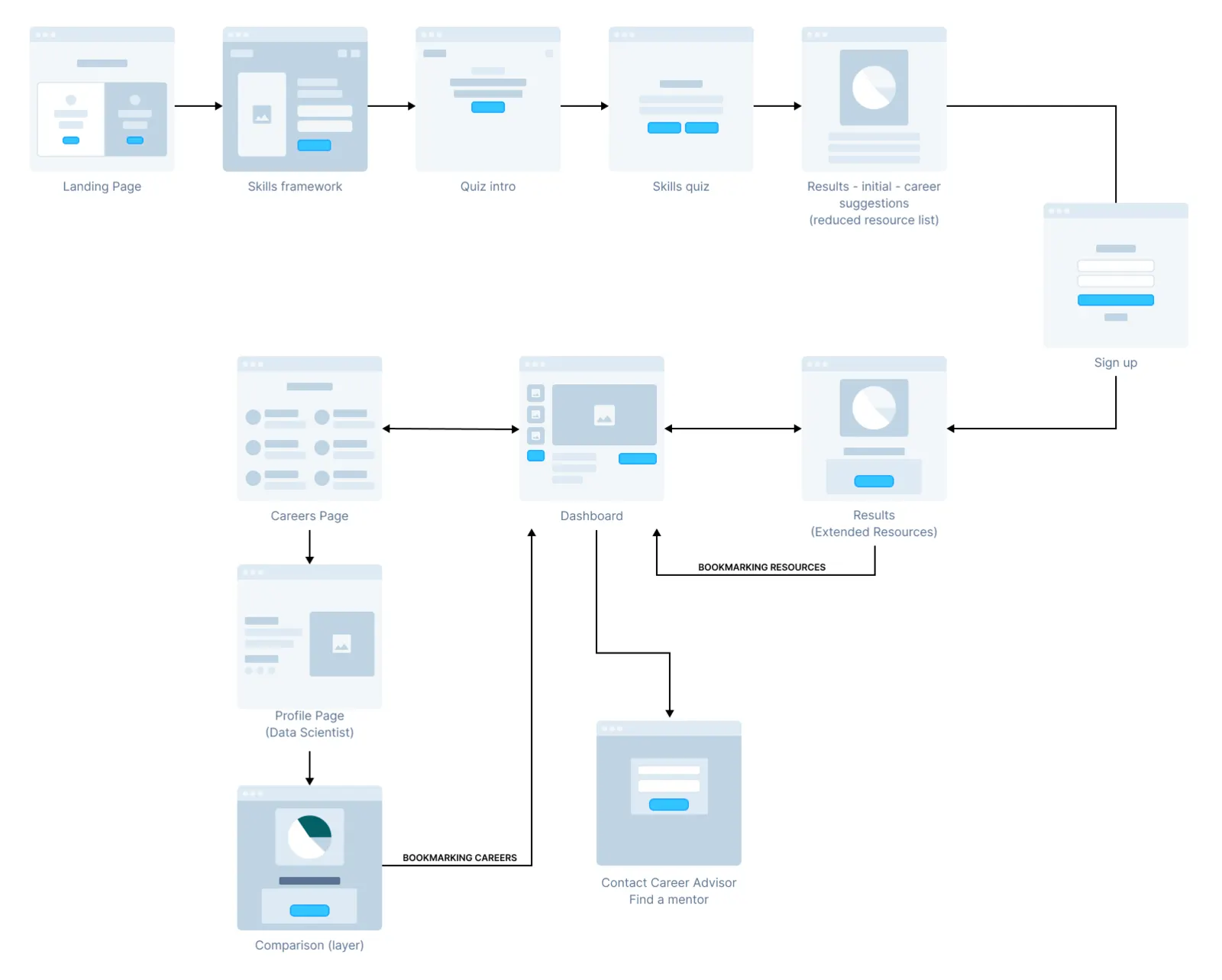
- Moderated testing on a Figma prototype to refine the concept before anything was built.
- A live website prototype, because a Figma file can't produce a pricing signal.
- Unmoderated testing with 125 researchers, measuring intent and willingness to pay against indicative tiered pricing.
Key decision
Spend development capacity on a working prototype instead of more interviews. The organisation's question was commercial, and no number of extra conversations would have produced a price signal.
Outcome
- ~66% positive intent to try and ~23% willingness to pay at indicative tiered pricing (n=125).
- An evidence-based MVP scope and prioritisation framework — skills mapping, career options, learning resources and peer exchange — which the Senior PM took into the investment decision.
- In early 2023, leadership redirected attention to generative AI and the concept was deprioritised: a portfolio decision, not a verdict on the evidence.
What I learned
- Treat an organisation's shifting priorities as part of discovery, not background to it. We validated demand between November 2022 and February 2023 — exactly when generative AI became a live question for publishing. Sound evidence for the wrong question is still a lost quarter.