Getting a sales team to trust an AI recommendation
How I took E.ON's lead-recommendation tool from a working model to a product the sales organisation actually used.
- 58%
- weekly active use at 12 weeks
- ~30%
- faster response to typical lead enquiries
- 4 → 1
- scattered sources replaced by one tool
My role
I took over Sophia before its qualification phase and owned qualification, the final iteration, launch and internal rollout. The Head of Data and the data science team owned the models; I owned whether the sales organisation adopted them.
Context
E.ON's B2B sales organisation worked from fragments: CRM records, SharePoint folders, email threads and handwritten notes. No rep had the full picture of an account, and no two reps had the same one. A data science team had built the answer — web scraping, lead scoring and a recommendation engine showing which leads to pursue and why. The models worked. The product wasn't ready.
The challenge
Sales teams are sceptical of algorithmic lead prioritisation. Reps have their own book, their own instincts, and long memories of tools that wasted their time. If Sophia wasn't faster than the old workflow on day one, they'd go back to SharePoint and never return. Most enterprise recommendation tools fail right here: a working model nobody opens.
What I did
- Ran qualification as advocacy-building. Interviews with a selected group of sales reps confirmed what the first dashboard needed — and turned those reps into the product's internal advocates at rollout.
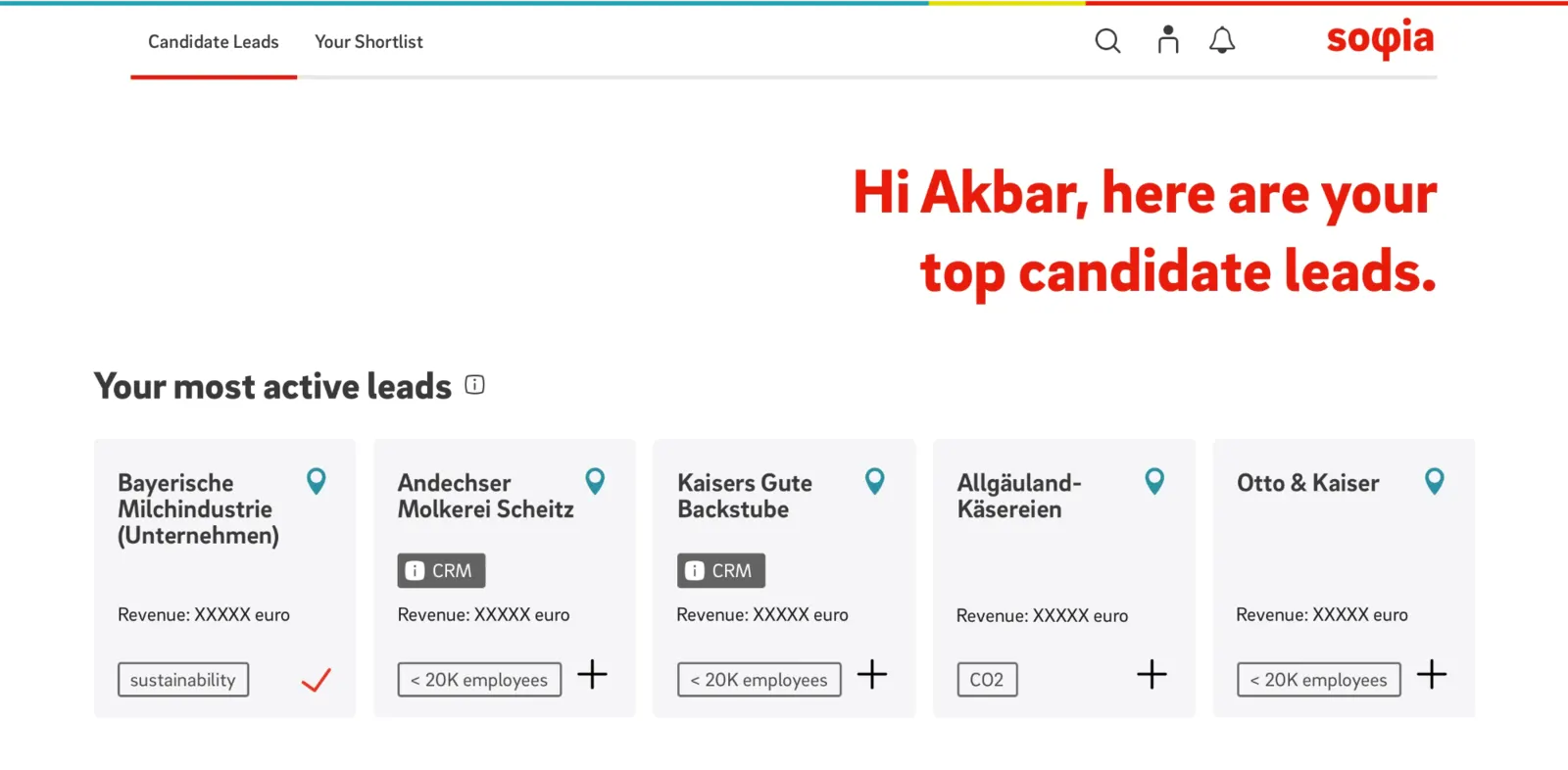
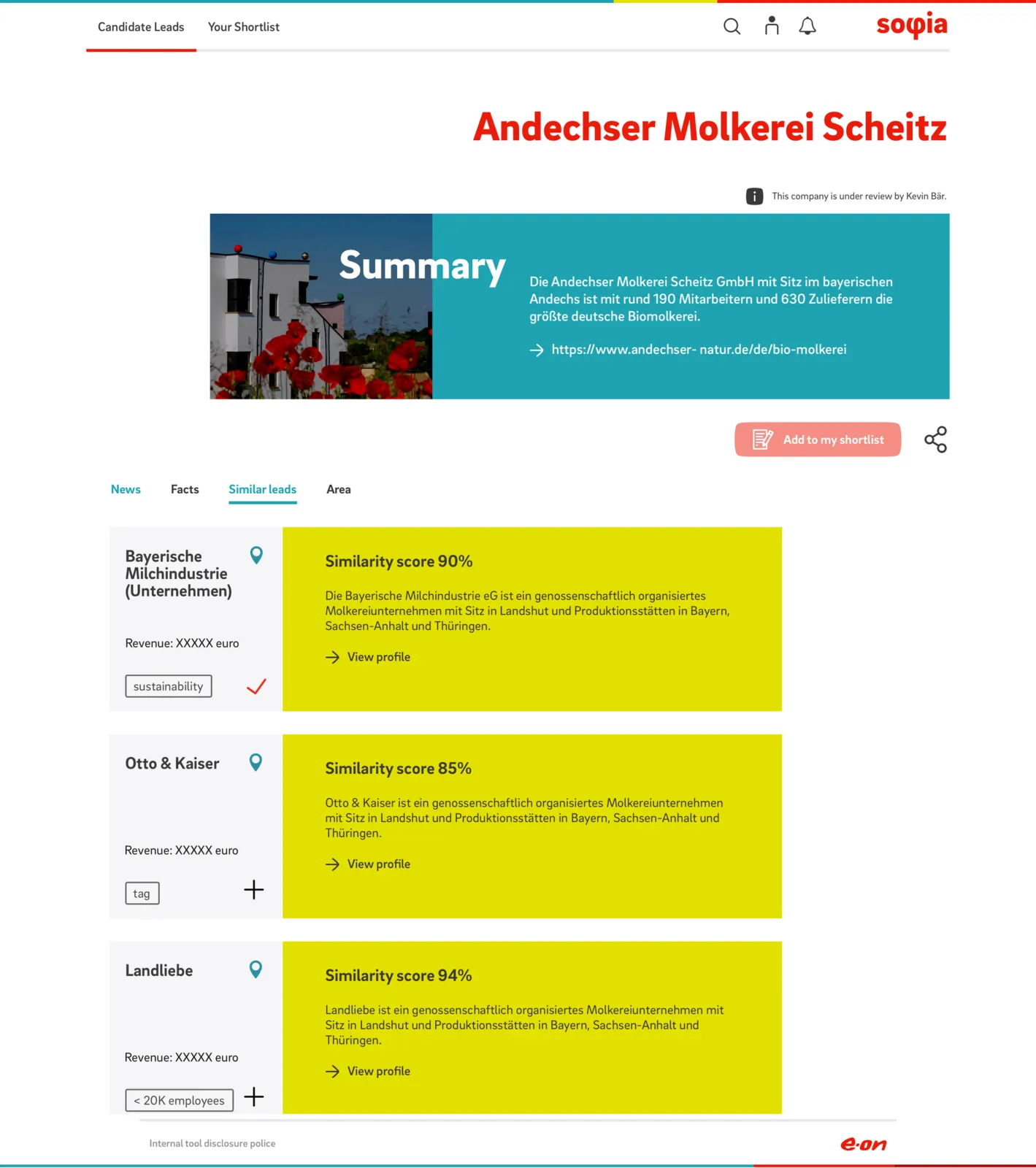
- Specified the first dashboard from what reps needed to act on a recommendation: which signals, in what order and at what level of detail.
- Consolidated the scattered sources into one place, so Sophia replaced the old workflow instead of adding to it.
- Used a formal user insights report as the checkpoint before rollout, then ran rollout as a staged retirement of old habits rather than a switch-off.
Key decision
Treat adoption, not model accuracy, as the product risk. The people you interview during validation are the ones who carry the product into the organisation afterwards — a pattern I've since used in industrial settings too.
Outcome
- 58% weekly active use within the target group at 12 weeks.
- Roughly 30% faster response to typical lead enquiries.
- SharePoint folders, email threads and manual notes gradually retired as the working system of record.
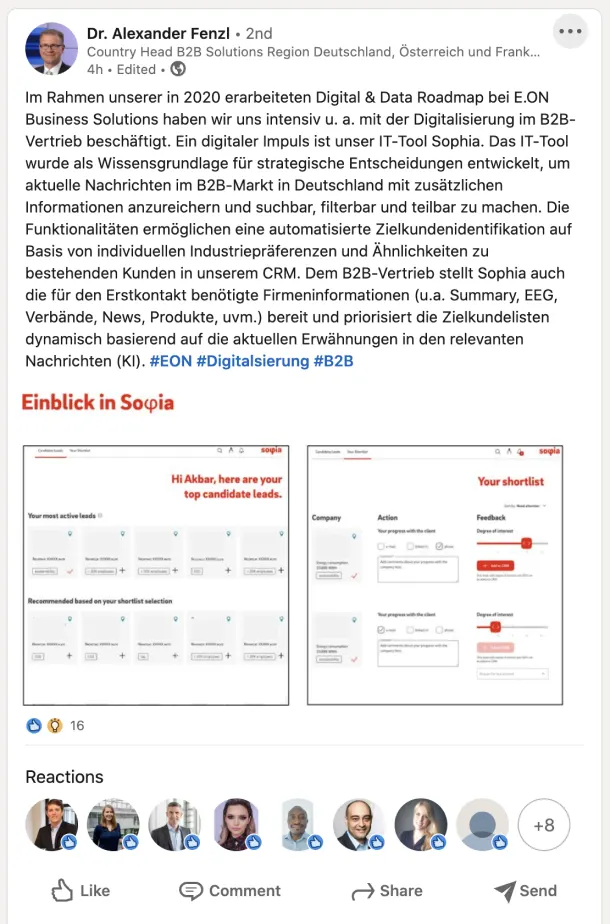
- E.ON's Country Head B2B for Germany, Austria and France publicly championed the platform.
What I learned
- A new tool has to beat the old workflow in its first week, or it never gets a second one. Speed and a visible reason behind every recommendation did more for trust than model accuracy alone.