From a vision engineers believed in to a shipped AI troubleshooting flow
How I helped Voith define the future of paper-mill operations, then turned part of it into shipped MillOne features.
- March 2025
- MillOne public launch
- 4
- engineering disciplines signed off one MVP
- 3
- stages from today's operations to autonomous papermaking
My role
Product lead across two phases. First, I led a four-person team — creative technologist, researcher, product designer and UX designer — through Voith's future-vision work. Then I led product strategy and delivery for two MillOne features, mentored two UX designers embedded in the delivery teams, and worked as the link between concept and Voith's product owners. Voith's product owners and engineers owned the build; domain experts owned technical depth.
Context
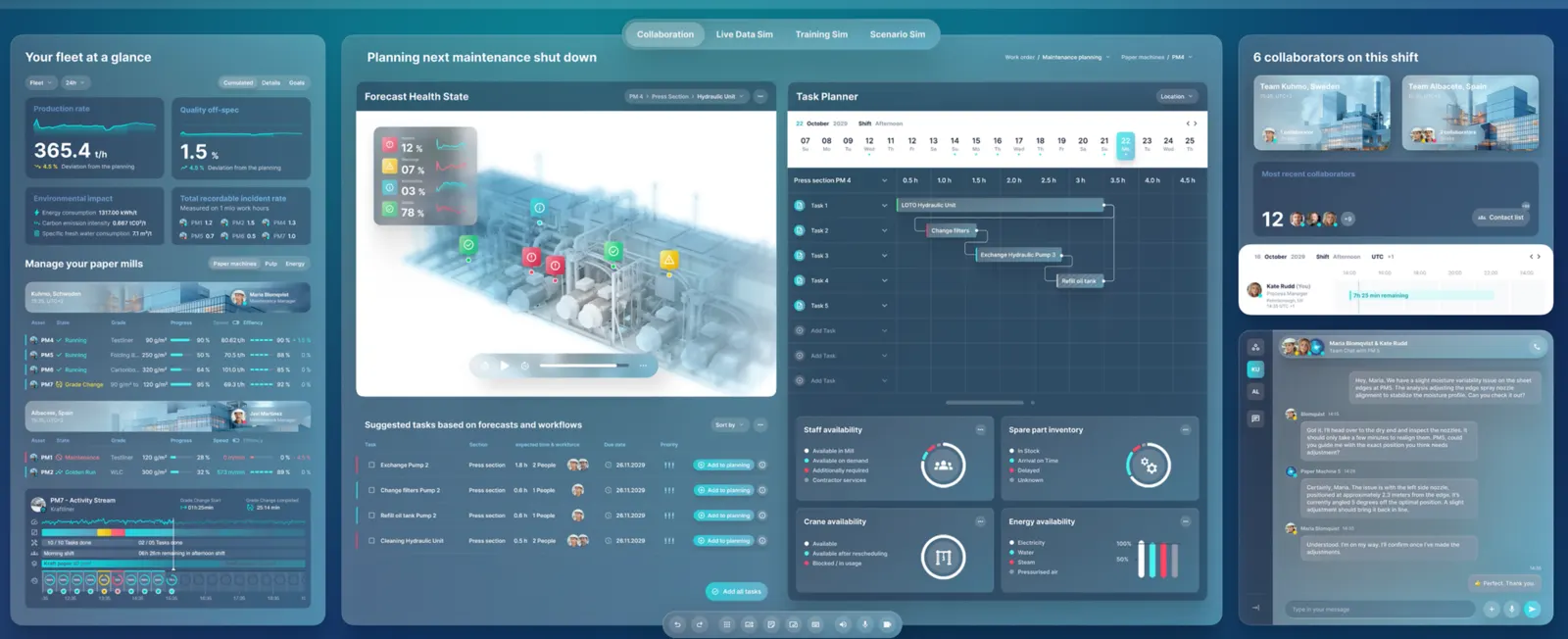
Paper mills are losing experienced operators faster than they can replace them, and the knowledge needed to diagnose a machine fault lived in people's heads. Machine optimisation had reached its limit, so Voith looked for the next gains in how people and machines work together — and in MillOne, an operations platform that holds expertise in the system rather than in the workforce. I worked within Voith's innovation lab, Ray Sono, alongside Voith's automation, mechanical engineering and data experts.
The challenge
Two audiences, two problems. Mechanical engineers initially dismissed a future vision as fantasy, and they were the people who would have to build it. And operators already had their own way of diagnosing faults: informal, experience-based and invisible to any system. Any AI support had to start from how they actually worked, not from what a model could do.
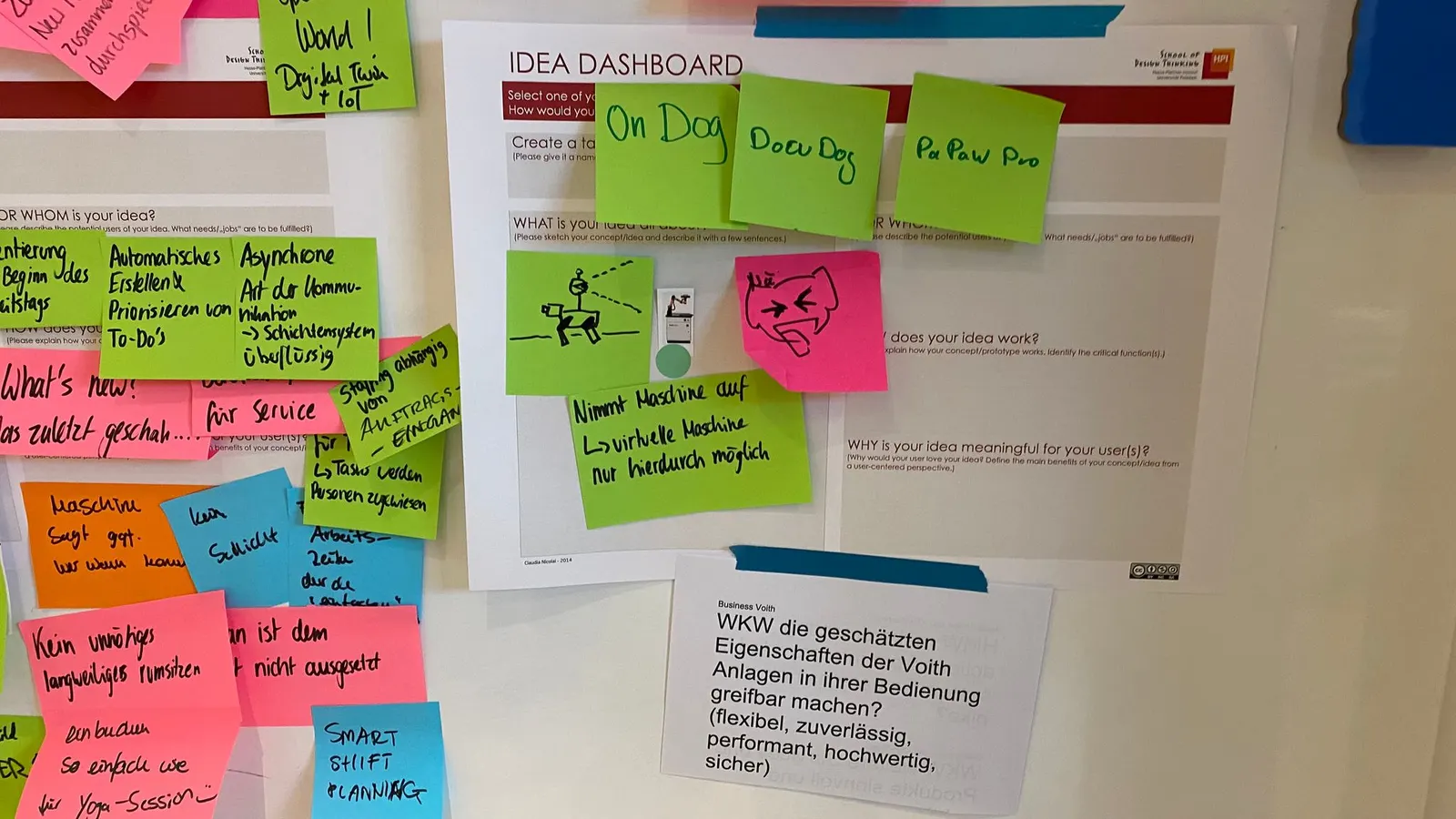
What I did — 1. A vision engineers could argue with
- Innovated in the greenfield, stayed grounded in the brownfield. Every concept had to trace back to real plant conditions and existing systems, or it didn't survive.
- Anchored the vision on one real subsystem, the hydraulic unit, so engineers had something concrete to challenge.
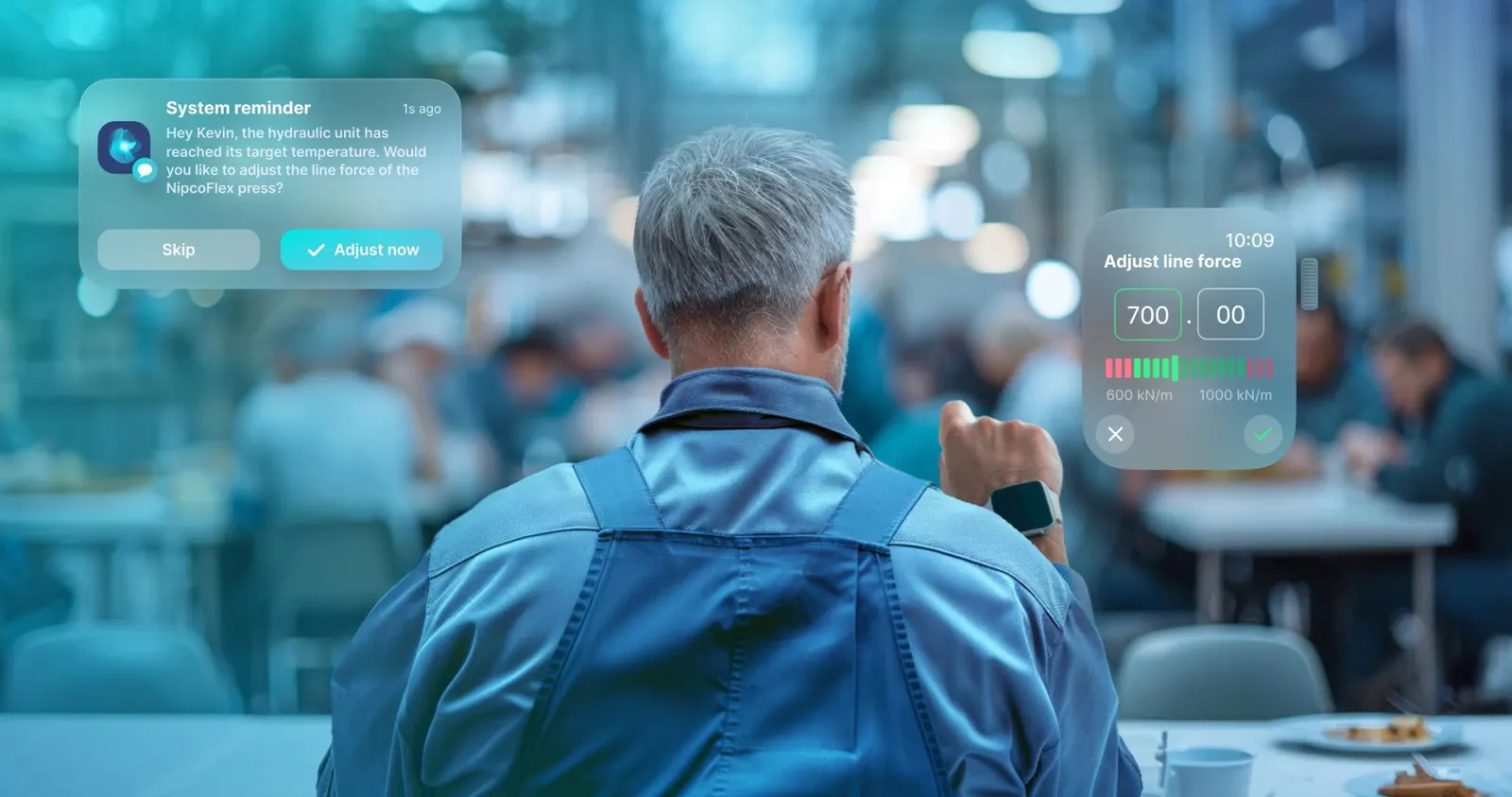
- Kept what worked. Operators valued physical pressure and rotary controls; the pain was walking across huge machines to reach them. The vision kept the controls and solved the distance.
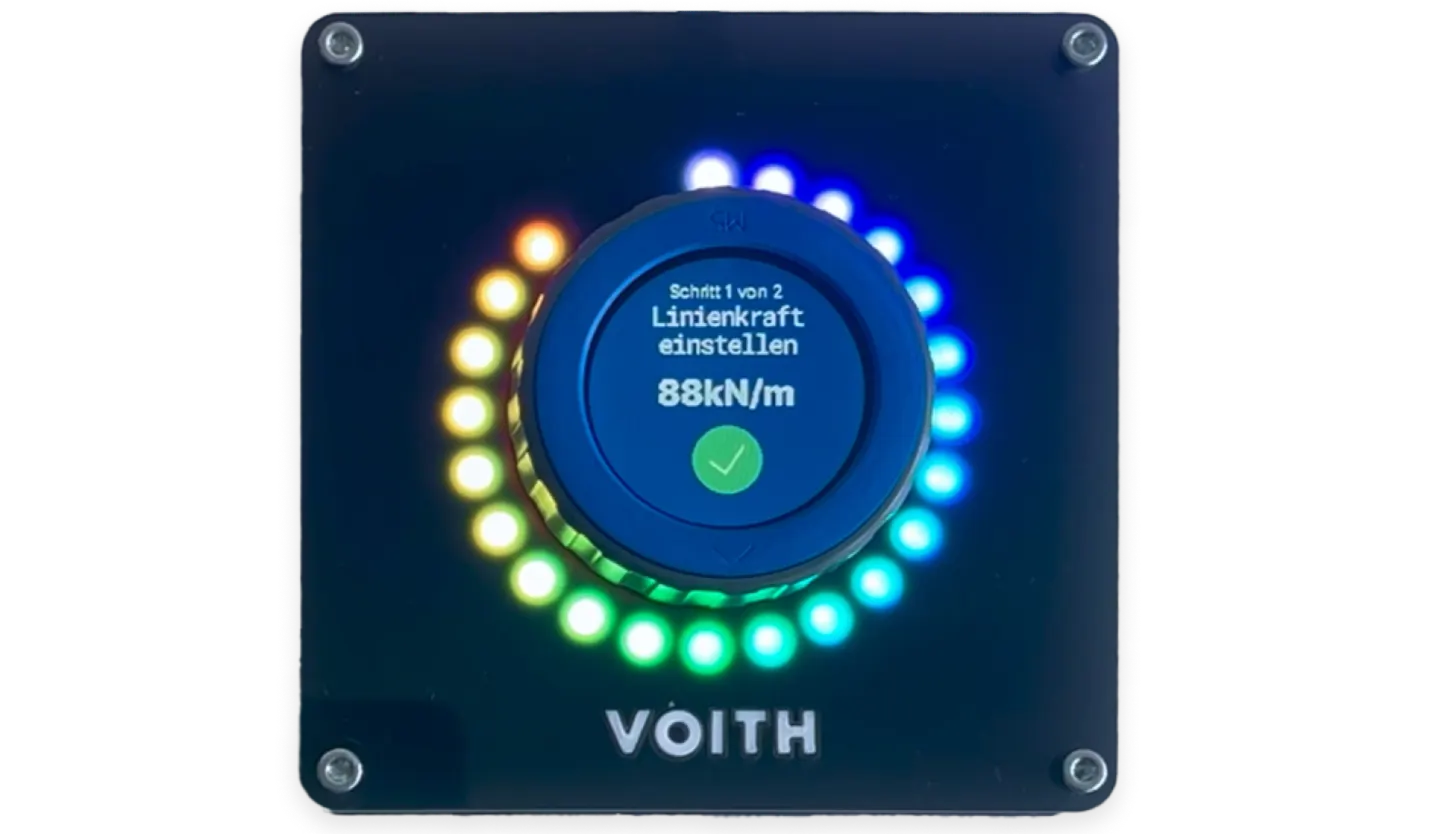
- Chose depth over breadth. Instead of more concepts, we built one working prototype — a Smart Button, built by our creative technologist, that puts several functions on one portable control. It convinced even the most sceptical engineers.
- Delivered future operating concepts, human-machine interaction guidelines with a hydraulic-unit case study, and a three-stage roadmap from today's operations to the envisioned future.
What I did — 2. Shipping AI-supported fault diagnosis
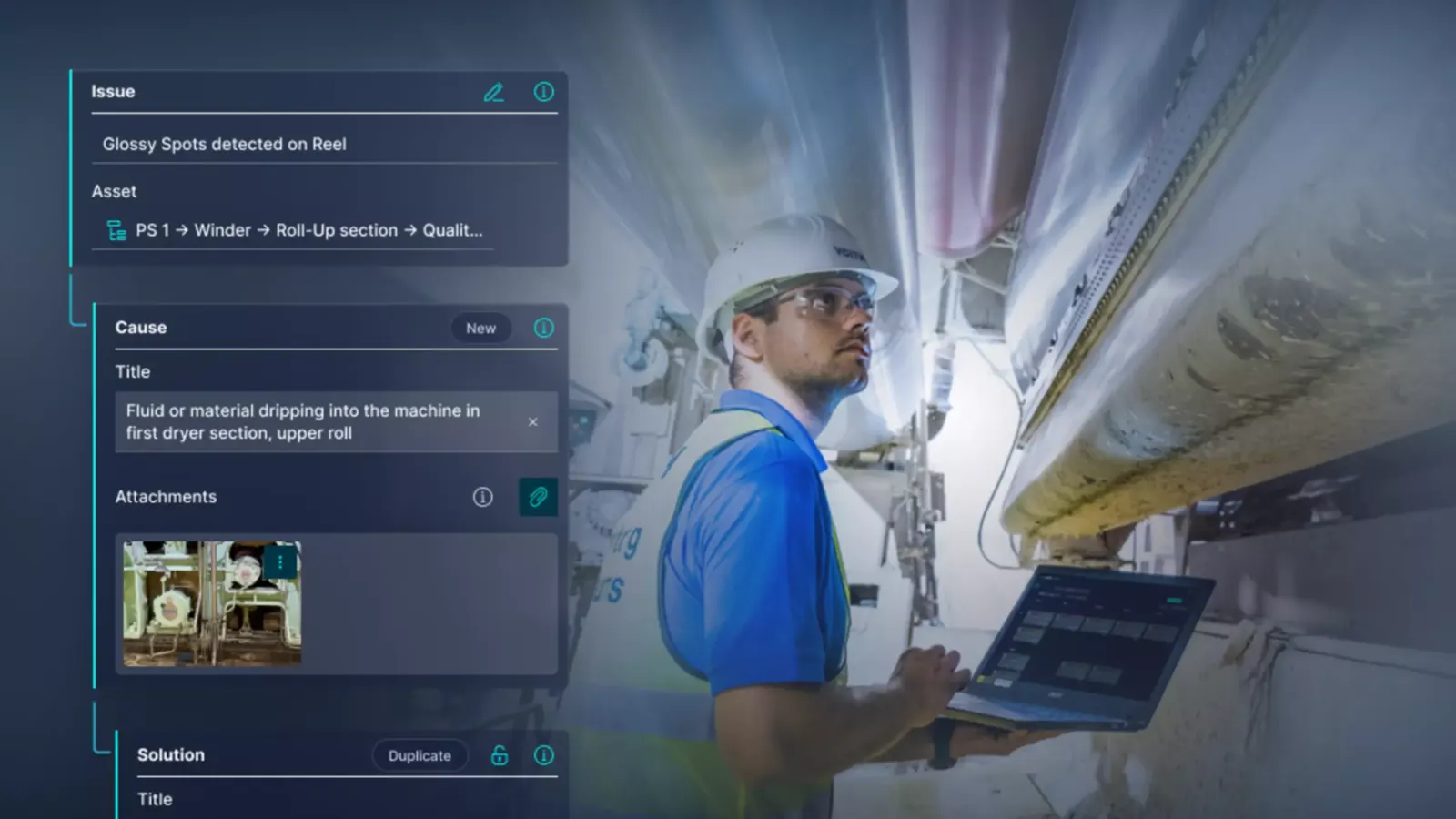
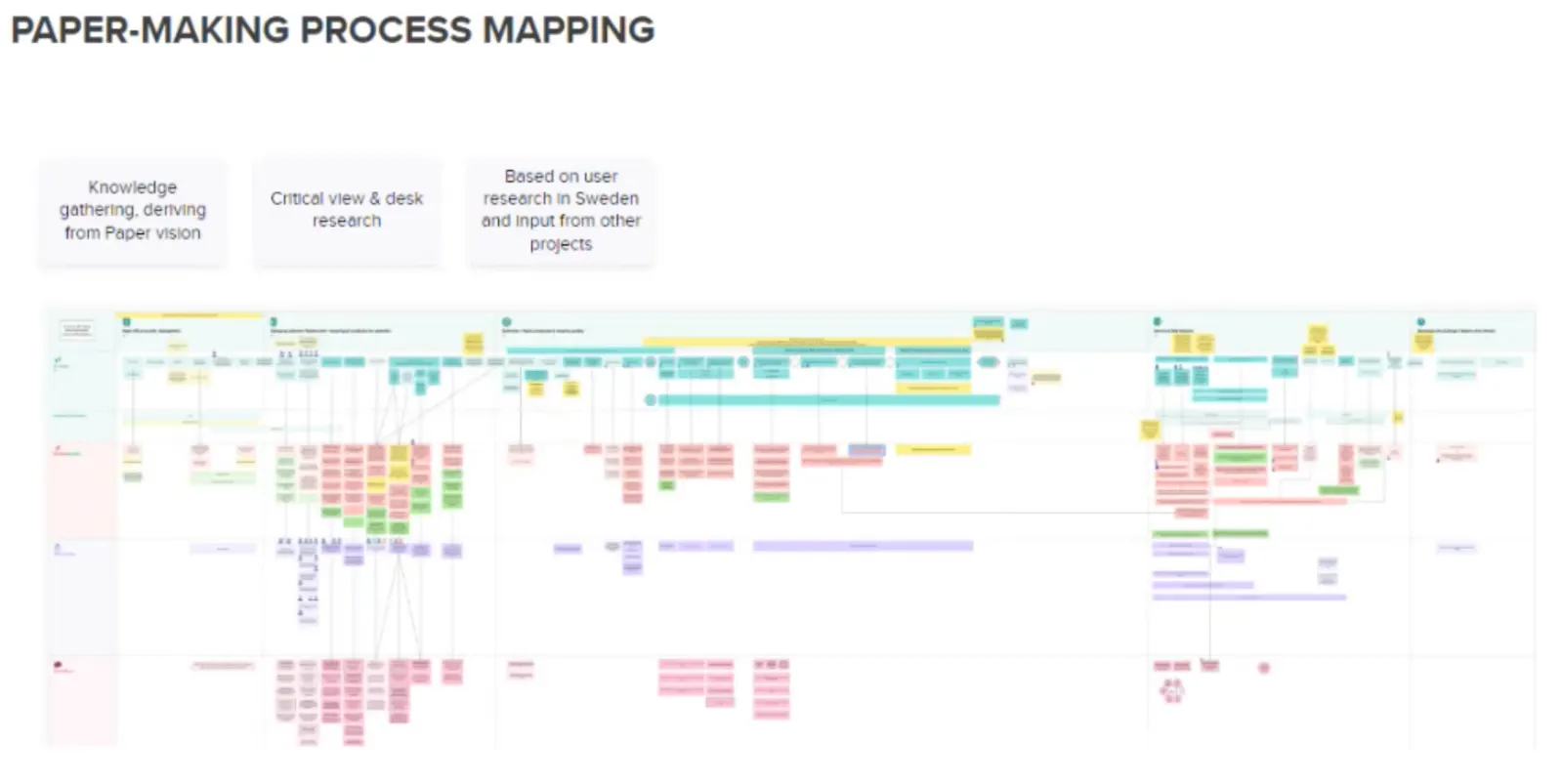
- Root cause failure analysis: mapped how operators diagnose faults today with Voith's papermaking technical director, built the case maps, and specified the feature and use cases for the product owners.
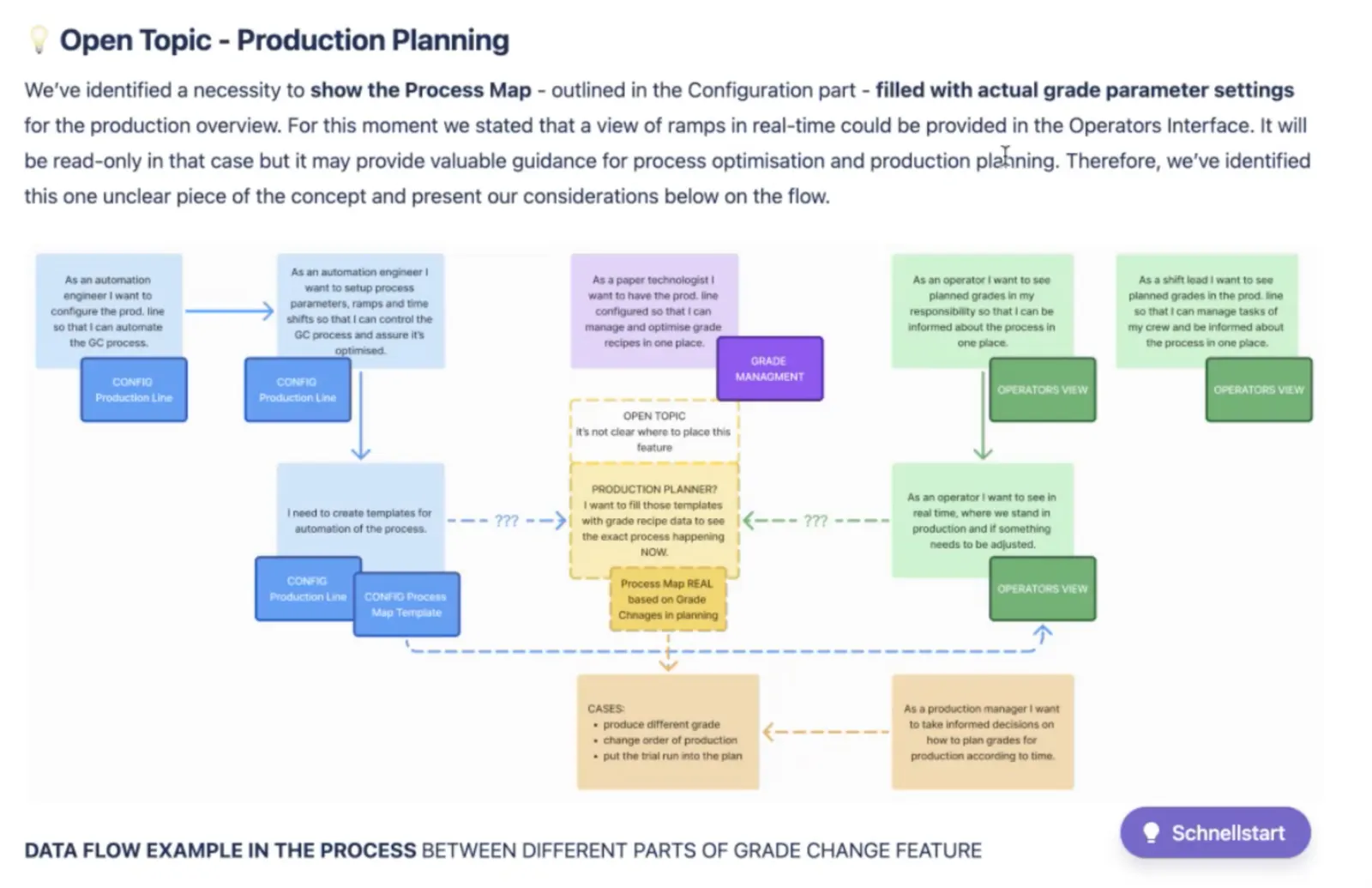
- Grade change: owned it end to end — discovery, business case, happy path, edge cases and the first roadmap — and got the MVP signed off across automation, mechanical engineering, machine design and data.
- Scoped stock preparation out of the MVP. It kept coming up, but grade change already spanned four engineering disciplines. Voith shipped stock preparation as its own release in July 2025.
Key decision
Let the AI guide, not diagnose. The data team built a bounded conversational layer over the root-cause model we had mapped, deliberately limited to walking the operator through the problem rather than diagnosing on its own. In a high-consequence setting, operator trust mattered more than automation.
Outcome
- Voith's Director of Product Management publicly credits the prototypes with proving technical feasibility and building trust in the vision, internally and with customers.
- Voith describes the work as a guiding star for its autonomous papermaking strategy, and the guidelines became a standing reference for its automation engineers.
- MillOne launched publicly in March 2025. Voith names Mondi as the first mill to implement it and reports adoption exceeding expectations within six months.
- Guided troubleshooting is now part of how Voith presents MillOne: an alarm triggers, the system walks the operator to the root cause, and the resolution goes into the shift handover.
What I learned
- Silence in a review room isn't agreement. Tangible artefacts moved the engineers; slides didn't. Next time I'd bring engineering into prototyping, not just review.
- Check where people will actually use a tool before designing it. The first diagnosis flow ran on a control-room desktop, away from the machine where diagnosis happens.